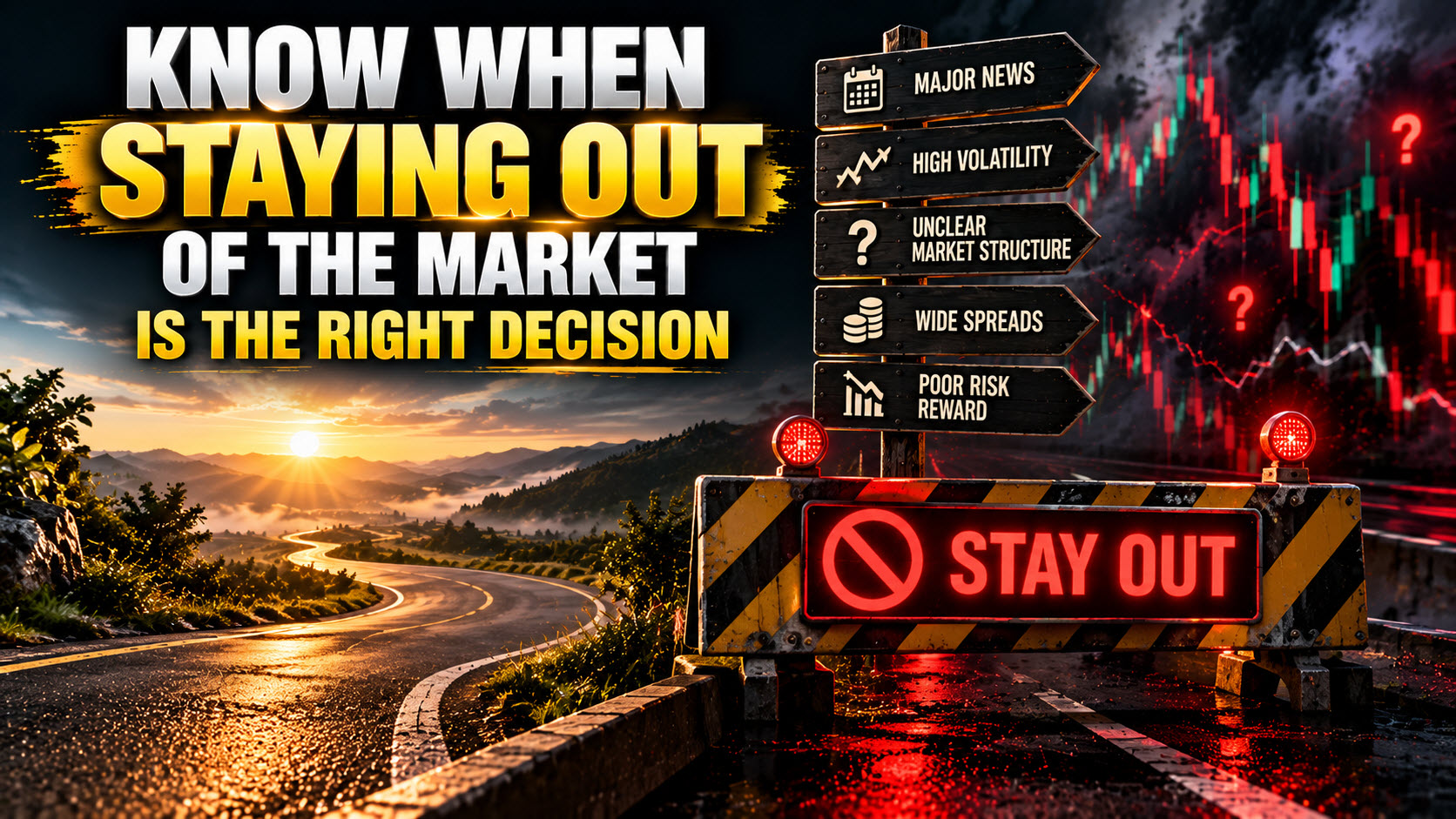
The Forex market does not always offer clear trading opportunities.
Sometimes, price moves sharply in both directions. Economic announcements create sudden volatility. Central banks deliver unexpected messages. Geopolitical developments change market sentiment, while technical structures become difficult to interpret.
During such periods, even experienced traders can struggle to identify reliable opportunities.
The challenge is not simply finding profitable trades. It is managing risk when market conditions become unpredictable.
Many traders continue using the same position sizes, trading frequency and strategies regardless of what is happening in the market. This can expose their accounts to unnecessary risk.
Successful risk management is not only about deciding how much to risk on a trade. It is also about recognizing when market conditions require a different approach.
Let’s look at how you can protect your Forex account when uncertainty increases.
The first step toward protecting your account is recognizing when the market environment has changed.
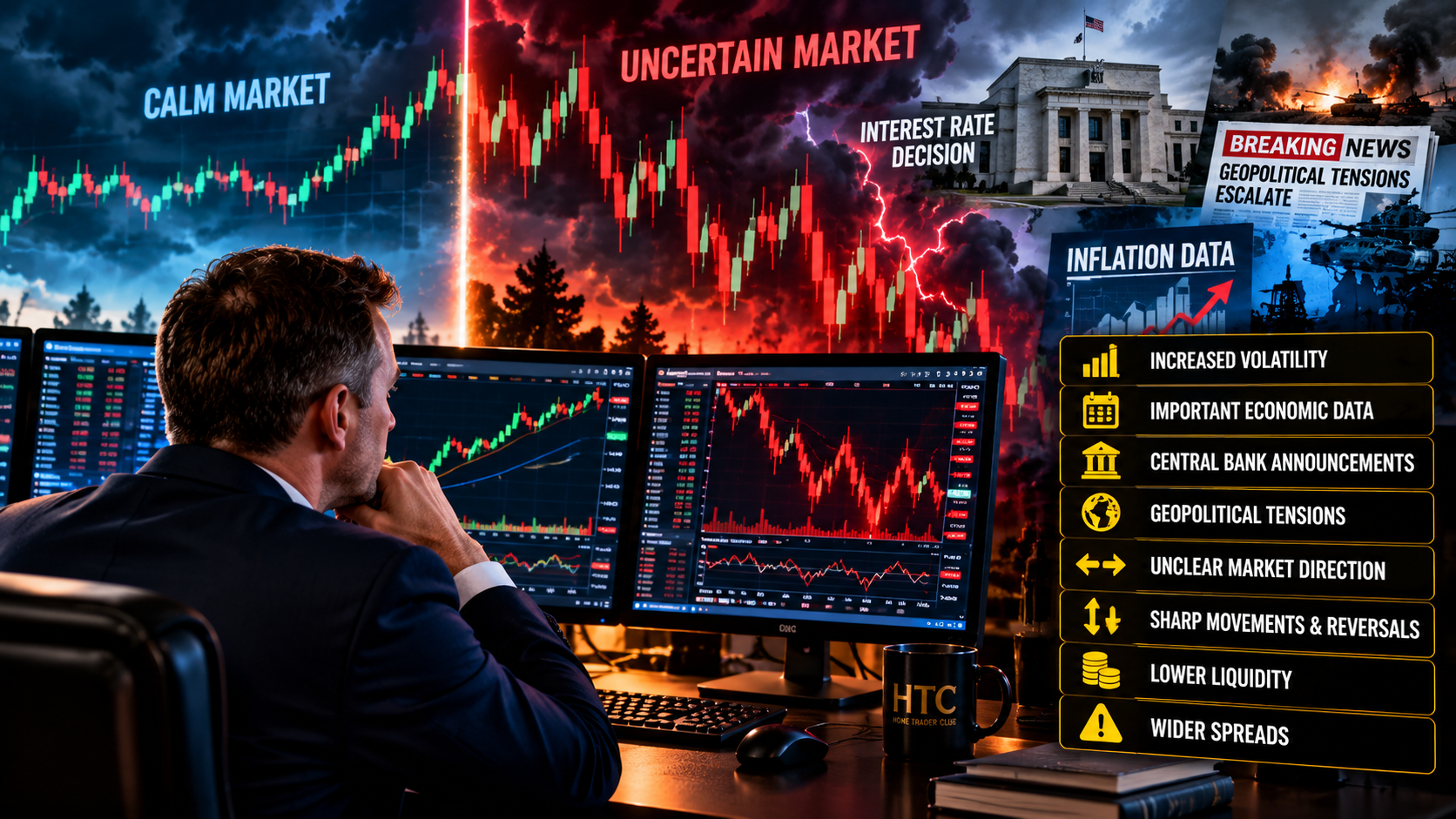
Uncertainty can appear in several forms:
Sudden increases in volatility
Unexpected economic data
Major central bank announcements
Geopolitical tensions
Unclear market direction
Sharp movements followed by rapid reversals
Lower liquidity and wider spreads
These conditions can make price behavior less predictable and increase the risk of poor trade execution.
For example, a currency pair that has been following a clear trend for several weeks may suddenly begin moving sharply in both directions ahead of a major central bank decision.
A trading strategy that performed well during the previous trend may not work as expected in this new environment.
This does not mean that every uncertain market should be avoided. It means traders should recognize that the risks and characteristics of the market may have changed.
The first step in risk management is understanding the environment in which you are trading.
Position sizing is one of the most direct ways to control the financial impact of a trade.
During uncertain conditions, you may encounter wider stop-loss distances, greater price fluctuations or a higher possibility of slippage.
Maintaining the same position size in every situation can therefore produce very different levels of actual risk.
Consider a trader with a $10,000 account.
At a planned risk of 1% per trade, the intended loss is $100.
If market conditions become unusually volatile, the trader might decide to reduce planned risk to 0.5%, making the intended loss $50.
This reduces the amount exposed to the trade, assuming the stop executes at the expected price.
The exact adjustment should depend on your trading plan, strategy and risk tolerance. Reducing position size is not a guarantee against losses, but it can limit the financial impact of an unfavorable outcome.
It is also important to remember that a wider stop loss does not automatically require a larger financial risk. Position size can be adjusted to keep the planned risk within your chosen limit.
Your position size should reflect the risk you are willing to accept, not simply the size of the opportunity you see.
Economic announcements can create sudden price movements that are difficult to manage.
Important events include:
Central bank interest rate decisions
Inflation reports
Employment data
Gross domestic product releases
Central bank press conferences
Major geopolitical announcements
The challenge is that markets do not always react in the direction traders expect.
Even when an economic release appears positive for a currency, the currency may fall because expectations, forward guidance or market positioning have already influenced prices.
Before an important announcement, review your open positions and consider whether you are comfortable with the additional event risk.
You may decide to reduce exposure, close a position, wait until the announcement has passed or avoid opening a new trade.
There is no universal rule requiring every trader to stay out of the market during news. The important point is to understand whether your strategy has been tested under those conditions and whether your planned risk accounts for possible volatility.
Don’t let an unexpected announcement turn a planned trade into an unmanaged risk.
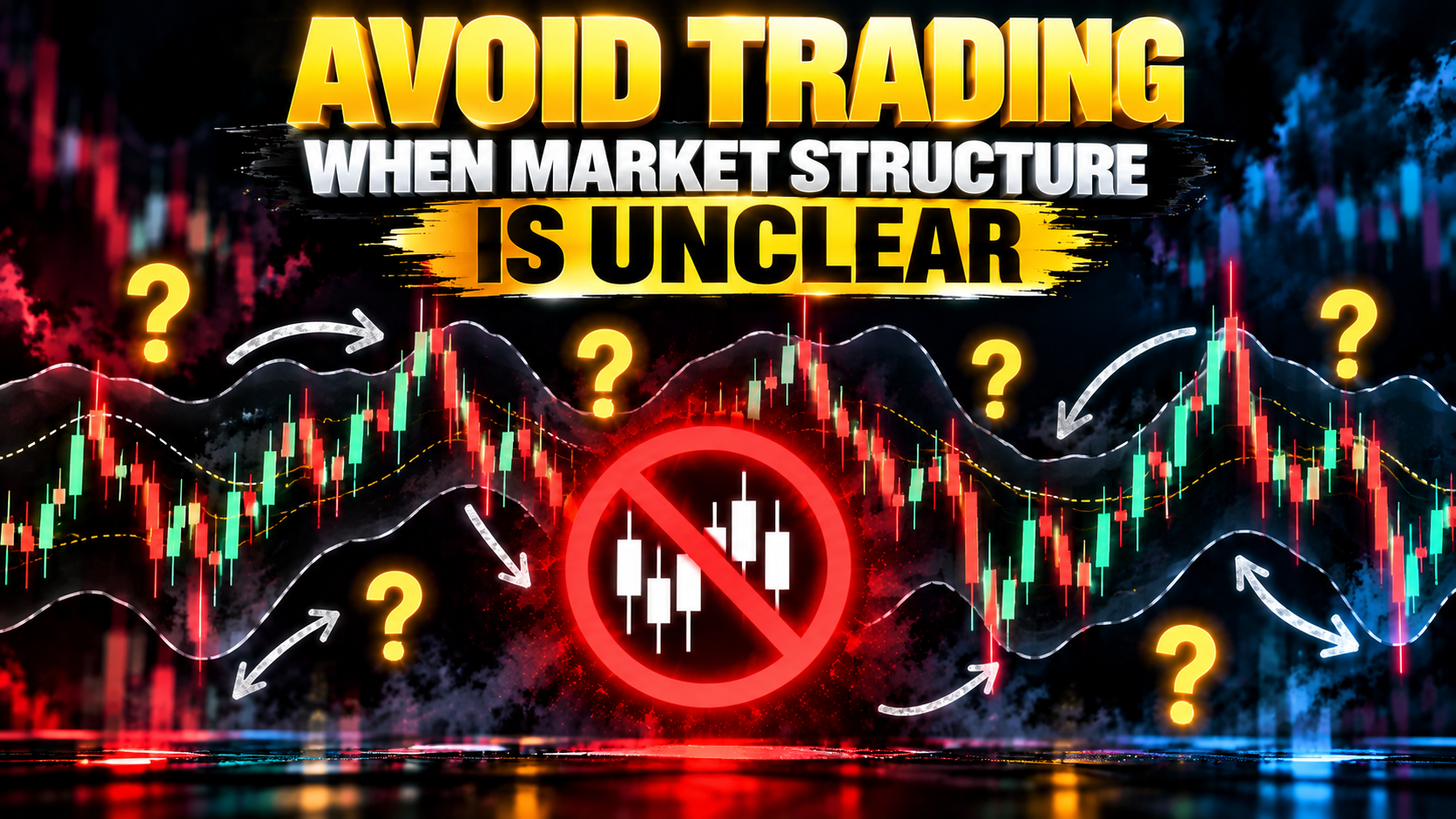
Uncertain markets often produce confusing price action.
A currency pair may break above resistance, reverse sharply, break below support and then recover within a short period.
Such movements can create the impression that opportunities are everywhere. In reality, unclear market structure may make it harder to identify trades with a well-defined entry, invalidation level and acceptable risk.
Instead of forcing a trade, consider waiting for:
A clearer trend or range
Well-defined support and resistance
Confirmation from your preferred trading setup
A reasonable stop-loss location
A favorable relationship between potential reward and risk
If these conditions are absent, doing nothing is a valid decision.
A trading plan should define not only when to enter the market but also when conditions are unsuitable for your strategy.
You don’t need to trade every market condition to remain an active trader.
Leverage allows traders to control a larger position with a relatively small amount of margin.
However, it also magnifies the impact of adverse price movements on account equity.
During uncertain conditions, excessive leverage can become particularly problematic because price may move rapidly, spreads may widen and positions can experience larger fluctuations.
Consider a trader who holds several positions using substantial leverage. Even if each individual position appears manageable, a sudden move affecting the same currency could produce a significant combined loss.
To manage leverage more carefully:
Avoid using the maximum leverage available simply because your broker offers it.
Calculate the total exposure of all open positions.
Keep sufficient free margin.
Avoid adding positions simply to recover floating losses.
Review how a sudden adverse move could affect your account equity.
Remember that margin is not the same as risk. A small margin requirement does not mean that the position has a small potential loss.
Managing leverage means understanding the financial exposure behind every position, not merely how much margin is required to open it.
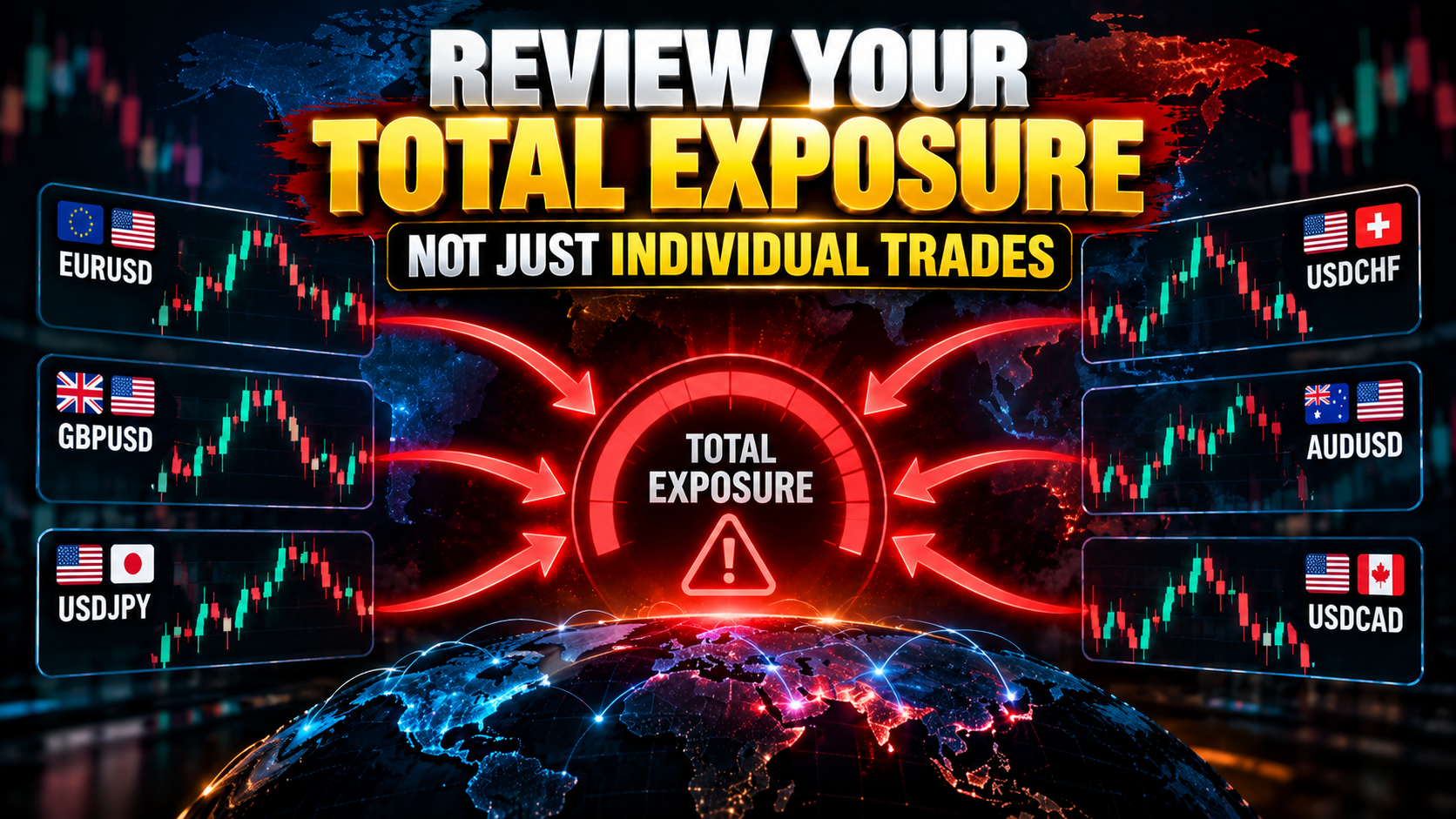
One common risk-management mistake is evaluating every trade separately without considering how all open positions interact.
For example, a trader may hold:
A long EUR/USD position
A long GBP/USD position
A short USD/CHF position
Although these are different currency pairs, all three positions can be influenced by broad US dollar movements.
If the dollar strengthens sharply, several positions may move against the trader at the same time.
This creates concentration risk.
During uncertain conditions, review your open trades and identify whether they depend on similar market drivers.
Ask yourself:
How much am I exposed to the US dollar?
Do several positions rely on the same market direction?
What happens if the same economic event affects all my trades?
Could simultaneous losses exceed my planned account risk?
Diversification across currency pairs does not automatically mean diversification of risk.
Sometimes, holding fewer positions with more clearly understood exposure is easier to manage than maintaining several trades that respond to the same underlying factor.
Market uncertainty affects more than price direction.
It can also affect the cost and quality of trade execution.
During major announcements, periods of reduced liquidity or sudden market movements, spreads may widen and orders may be executed at prices different from those requested.
This matters because your actual trading outcome may differ from the result you planned using normal market conditions.
A stop-loss order can help define an exit level, but it does not always guarantee execution at that exact price.
For example, if a market gaps through your stop level or moves extremely quick, the resulting execution may be less favorable than expected.
To reduce the impact of execution risks:
Monitor spreads before entering a trade.
Be cautious during low-liquidity periods.
Avoid assuming that normal trading costs will apply during major events.
Check your broker’s order-execution conditions.
Include possible slippage in your risk assessment where appropriate.
This is especially important for short-term strategies, where trading costs can represent a significant portion of the expected profit.
A good trade idea can still produce a poor result if execution conditions are unfavorable.
A predefined loss limit can prevent one difficult trading session from turning into a much larger account problem.
Consider setting limits for:
Maximum risk on a single trade
Maximum combined open risk
Maximum daily loss
Maximum weekly loss
Maximum acceptable account drawdown
These limits should be established before trading, not invented in response to emotional pressure.
For example, if your trading plan includes a maximum daily loss, reaching that limit should trigger a pause rather than an attempt to recover the money immediately.
This is particularly useful when markets are moving unpredictably, because rapid price changes can encourage repeated entries and impulsive decisions.
A loss limit is not a prediction of how much you will lose. It is a boundary intended to control how much risk you are willing to accept.
It should also account for the possibility that actual losses can exceed planned limits because of slippage, gaps or execution issues.
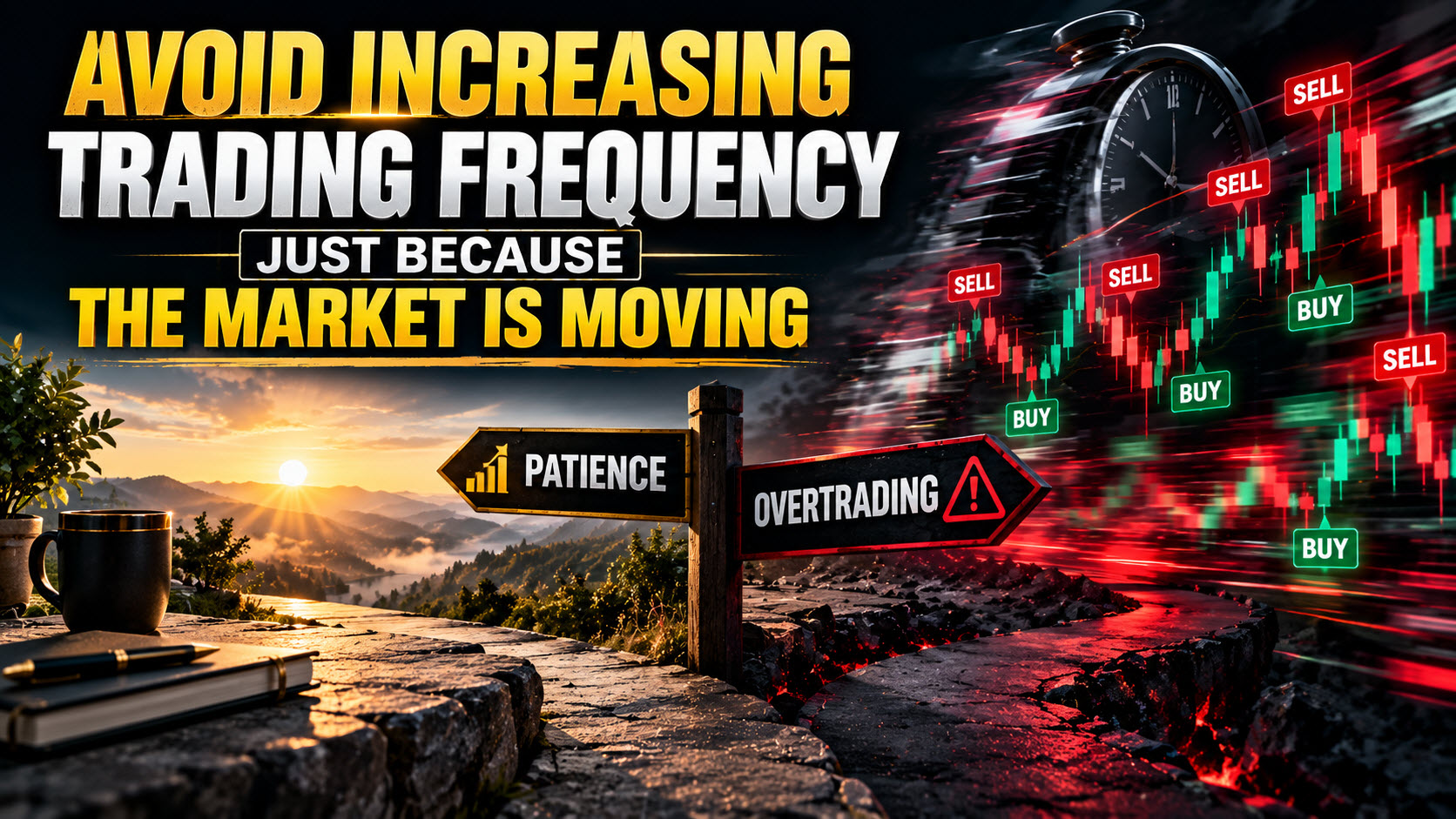
Fast-moving markets can create a sense of urgency.
Large candles, sudden breakouts and sharp reversals can make traders feel that they must act immediately or miss an opportunity.
But market activity and trading opportunity are not the same thing.
A market can be highly active while offering poor conditions for your particular strategy.
Increasing trading frequency during uncertain periods may expose your account to:
More transaction costs
More opportunities for execution errors
Repeated exposure to unpredictable price movements
Greater emotional fatigue
More decisions made without sufficient confirmation
Instead of trying to participate in every significant movement, remain selective.
If your strategy requires a particular market structure or confirmation, wait until those conditions appear.
There is no advantage in taking a trade simply because the market is moving quickly.
Uncertainty does not disappear when you stop watching the charts.
Economic developments, political announcements and unexpected events can occur outside active trading hours.
If the market reopens at a significantly different price, your position may experience a gap.
This can be particularly relevant when holding leveraged positions over weekends or ahead of major events.
Before leaving trades open overnight or over a weekend, consider:
The importance of upcoming announcements
The currencies and markets affected
Your total open exposure
Your available margin
Your tolerance for unexpected price gaps
You may decide that some positions should be reduced or closed before a period of elevated uncertainty.
However, closing a position also has a cost and may mean giving up a valid trading opportunity. The decision should follow your strategy and risk plan.
The key is to make that decision before you are exposed to the event, rather than reacting under pressure afterward.
Uncertain conditions can create emotional pressure.
A trader may become afraid of losing money and close every position too early. Another may become frustrated by missed opportunities and increase position sizes to compensate.
Both reactions can undermine a consistent approach.
Risk adjustments should be based on predefined conditions rather than temporary emotions.
For example, reducing exposure because your strategy specifies lower risk during major announcements is a planned decision.
Reducing exposure randomly because a chart looks frightening is an emotional reaction.
The same distinction applies to increasing risk.
If your strategy has a tested rule for adjusting position size based on volatility, follow that rule. Avoid increasing risk simply because a market appears to offer an unusually attractive opportunity.
Your objective is not to eliminate every uncomfortable feeling. It is to prevent those feelings from taking control of your trading decisions.
One of the most overlooked aspects of risk management is the ability to remain on the sidelines.
Traders often concentrate on finding entries, managing positions and identifying opportunities. But deciding not to trade can also be an important part of a trading strategy.
Consider staying out when:
Your preferred setup is absent.
Market structure is too unclear for your method.
Spreads are unusually wide.
You cannot define an acceptable stop-loss level.
Your current exposure is already high.
You are emotionally affected by recent trades.
You do not understand the risks surrounding an upcoming event.
Staying out does not mean you have failed to participate in the market.
It means you have recognized that the current conditions do not meet your requirements.
Protecting your capital sometimes means protecting yourself from the temptation to trade.
Risk management should be reviewed regularly, not only during difficult market conditions.
After a period of uncertainty, examine how your trading decisions performed.
Review questions such as:
Did I reduce risk when my plan required it?
Did I take trades outside my usual criteria?
Were my stop-loss levels appropriate for the market structure?
Did spreads or slippage affect my results?
Did I maintain my daily and weekly limits?
Were my decisions based on analysis or emotional reactions?
Your trading journal can help identify recurring weaknesses.
For example, you might discover that you consistently enter too early during volatile sessions or that you hold too many correlated positions before major economic releases.
These observations can help you improve your risk plan for future periods of uncertainty.
The purpose of a review is not to criticize every losing trade. It is to distinguish normal trading outcomes from avoidable risk-management mistakes.
Uncertain market conditions are an unavoidable part of Forex trading.
There will be periods when trends are clear and opportunities are easy to recognize. There will also be periods when price action becomes unpredictable, volatility increases and even familiar trading setups behave differently.
You cannot control market conditions, economic announcements or unexpected developments.
But you can control many aspects of your own exposure.
Adjusting position size, monitoring leverage, reviewing correlated positions, respecting loss limits and recognizing when not to trade can help you manage your account more carefully.
Remember that stop losses and other risk-management tools reduce or define certain risks, but they cannot eliminate the possibility of unexpected losses.
The goal is not to make money in every market condition. The goal is to maintain a risk-management process that you can follow in both favorable and unfavorable conditions.
When the market becomes uncertain, protecting your capital deserves at least as much attention as finding your next trading opportunity.
To Your Trading Success,
Vladimir Ribakov
Internationally Certified Financial Technician (CFTe)
Home Trader Club
Have you ever opened your trading platform, watched the market move, and felt that you…
Employment data is one of the most important economic indicators in Forex fundamental analysis. It…
Welcome back to our weekly Forex forecast at Home Trader Club. This week, we are…
GDP growth is one of the most important indicators of economic health. But does stronger…
When it comes to fundamental Forex analysis, few institutions matter as much as the Federal…
Interest rates are one of the most important fundamental forces in the Forex market. But…