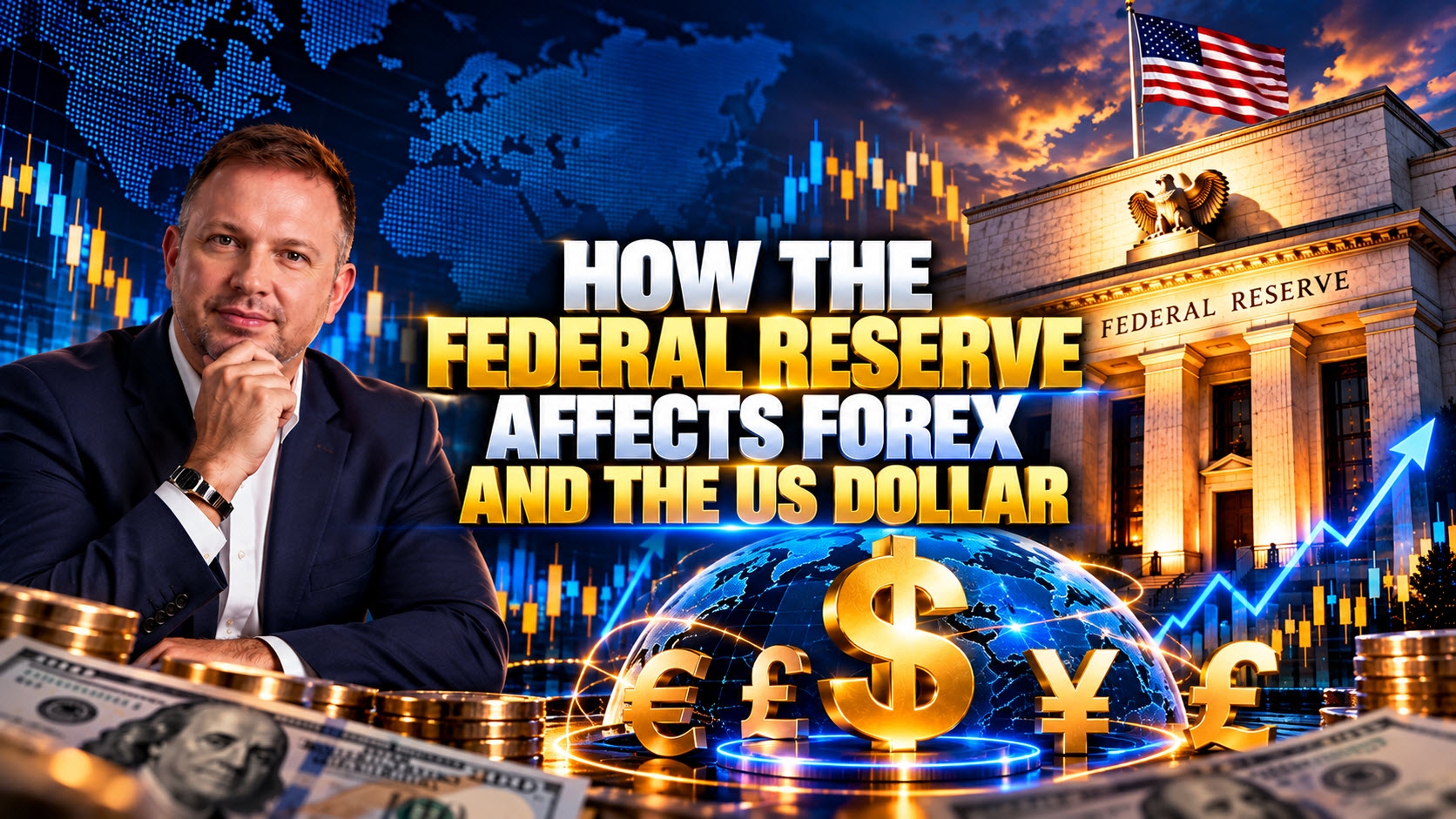



When it comes to fundamental Forex analysis, few institutions matter as much as the Federal Reserve, commonly known as the Fed.
The Fed is the central bank of the United States, and its monetary policy can have a major influence on the US dollar and the broader Forex market.
But the Fed does not influence currencies simply by changing interest rates.
Its decisions, economic outlook, statements and expectations about future monetary policy can all affect how traders value the US dollar.
For a Forex trader, understanding the Fed means understanding one of the most important forces behind movements in major currency pairs.
- 1 The Fed Influences the Cost of Money
- 2 The US Dollar Is at the Center of Global Forex Trading
- 3 Higher US Rate Expectations Can Support the Dollar
- 4 Lower Rate Expectations Can Pressure the Dollar
- 5 The Fed Responds to Economic Data
- 6 Inflation Can Change Fed Expectations
- 7 Employment Data Matters Too
- 8 FOMC Decisions Can Move Forex Markets
- 9 The Fed’s Words Can Be as Important as Its Actions
- 10 The Fed Must Be Compared With Other Central Banks
- 11 Why Expectations Matter More Than the Headline
- 12 The Fed Can Influence Forex Before Its Meeting
- 13 The Fed and the US Dollar: A Simple Framework
- 14 Don’t Assume Every Fed Decision Will Move the Dollar
- 15 Final Thoughts
The Fed Influences the Cost of Money
One of the Fed’s most important responsibilities is conducting US monetary policy.
The Federal Open Market Committee, or FOMC, sets a target range for the federal funds rate. Changes in this policy rate influence other short-term interest rates and can eventually affect borrowing, spending, investment, inflation and economic activity.
They can also affect exchange rates.
This creates an important connection for Forex traders:
Fed Policy → Interest Rates → Market Expectations → US Dollar → Currency Pairs
When expectations about US monetary policy change, the Forex market can react very quickly.
The US Dollar Is at the Center of Global Forex Trading
The US dollar is involved in a large proportion of global currency transactions.
It is also one side of many of the world’s most actively traded currency pairs, including:
- EUR/USD
- GBP/USD
- USD/JPY
- USD/CHF
- USD/CAD
- AUD/USD
- NZD/USD
Because of this, changes in expectations surrounding US monetary policy can have consequences across the Forex market.
A change in expectations for US interest rates can affect not only USD pairs but also the relative attractiveness of other currencies.
This is why a Forex trader should not look at the Fed as an isolated US economic story.
The Fed can influence the relative value of currencies around the world.
Higher US Rate Expectations Can Support the Dollar
When markets expect the Fed to maintain higher interest rates or become more restrictive, the US dollar can receive support.
The reason is straightforward.
Higher expected US interest rates can make dollar-denominated assets relatively more attractive compared with assets in economies where interest rates are expected to be lower.
But there is an important distinction.
It is not necessarily the current interest rate that matters most.
It is the expected future path of interest rates.
If traders suddenly expect the Fed to keep rates higher for longer, the dollar can react even if the Fed has not changed its policy rate that day.
This is one of the most important concepts in fundamental Forex analysis.
Lower Rate Expectations Can Pressure the Dollar
The opposite can also happen.
If markets begin expecting the Fed to reduce interest rates, or to reduce them sooner or more aggressively than previously anticipated, the dollar may come under pressure.
Again, the key issue is not simply whether the Fed has already cut rates.
The market may begin adjusting the dollar before an actual rate cut takes place.
For example, weaker economic data could cause traders to believe that monetary policy will become less restrictive.
Those expectations can influence currency prices before the Fed makes its next official decision.
Forex markets are forward-looking.
The Fed Responds to Economic Data
The Fed does not make monetary-policy decisions in a vacuum.
Economic conditions matter.
Forex traders therefore pay close attention to data that can influence the Fed’s view of the economy.
Some of the most important areas include:
- Inflation
- Employment
- Economic growth
- Consumer spending
- Wage growth
- Financial conditions
The market constantly asks:
“What does this economic data mean for future Fed policy?”
That question is often more important than simply asking whether the economic number was good or bad.
Inflation Can Change Fed Expectations
Inflation is particularly important because persistent inflation can influence how long the Fed needs to maintain restrictive monetary policy.
If inflation remains stronger than expected, markets may begin anticipating a more restrictive policy path.
That can support the dollar.
If inflation falls more quickly than expected, traders may begin considering a less restrictive policy path.
That can affect the dollar in the opposite direction.
But traders should avoid reducing the relationship to:
Higher inflation = stronger dollar
or
Lower inflation = weaker dollar.
The more important question is:
How does the inflation data change expectations for Fed policy?
That is the fundamental connection Forex traders should focus on.
Employment Data Matters Too
The US labor market is another important part of the Fed’s economic assessment.
Employment growth, unemployment and wage developments can provide information about the strength of the economy and potential inflationary pressure.
Strong employment data can sometimes encourage expectations that monetary policy will remain restrictive.
Weak employment data can sometimes increase expectations for future easing.
But once again, context matters.
One economic report does not automatically determine the direction of the US dollar.
The market considers the data alongside inflation, growth, previous expectations and the Fed’s own communication.
FOMC Decisions Can Move Forex Markets
The FOMC regularly meets to assess economic and financial conditions and determine the appropriate monetary-policy stance.
These meetings are closely watched by Forex traders.
But the headline rate decision is only one part of the story.
Traders also pay attention to:
- The policy statement
- Economic projections
- Press conference communication
- Changes in the Fed’s economic outlook
- Signals about future interest rates
- The tone of policymakers
This is important because the market may already expect the rate decision.
If the Fed does exactly what traders expected, the immediate currency reaction may be limited.
But if the decision or communication changes expectations for future policy, the reaction can be much stronger.
The Fed’s Words Can Be as Important as Its Actions
Sometimes the Fed does not need to change interest rates to influence the Forex market.
Its communication alone can change expectations.
Imagine that markets expect several future rate cuts.
Then the Fed communicates that inflation remains a concern and that policymakers may need to keep monetary policy restrictive for longer.
The current interest rate has not changed.
But expectations have changed.
That can influence the dollar.
This is why Forex traders should pay attention not only to what the Fed does, but also to what the Fed signals about what may happen next.
The Fed Must Be Compared With Other Central Banks
Forex is always relative.
This is a critical point.
Suppose the Fed becomes more hawkish.
That does not automatically mean the dollar will rise against every currency.
You also need to consider what the other central bank is expected to do.
For example, when analyzing EUR/USD, traders need to consider expectations surrounding both:
US monetary policy
and
Eurozone monetary policy.
If expectations for US rates become more hawkish while expectations for European rates become more dovish, the difference between the two policy paths may become more significant.
That can create stronger pressure on EUR/USD.
The same principle applies across other major currency pairs.
Why Expectations Matter More Than the Headline
One of the biggest mistakes traders make is looking only at the Fed’s latest decision.
For example:
“The Fed raised rates, so the dollar must rise.”
That is too simplistic.
What if the market expected the rate increase?
What if traders expected an even larger increase?
What if the Fed raised rates but signaled that future increases were unlikely?
What if the market was already heavily positioned for a hawkish decision?
The dollar’s reaction depends on the difference between expectations and reality.
This is why two seemingly similar Fed decisions can produce completely different Forex reactions.
The Fed Can Influence Forex Before Its Meeting
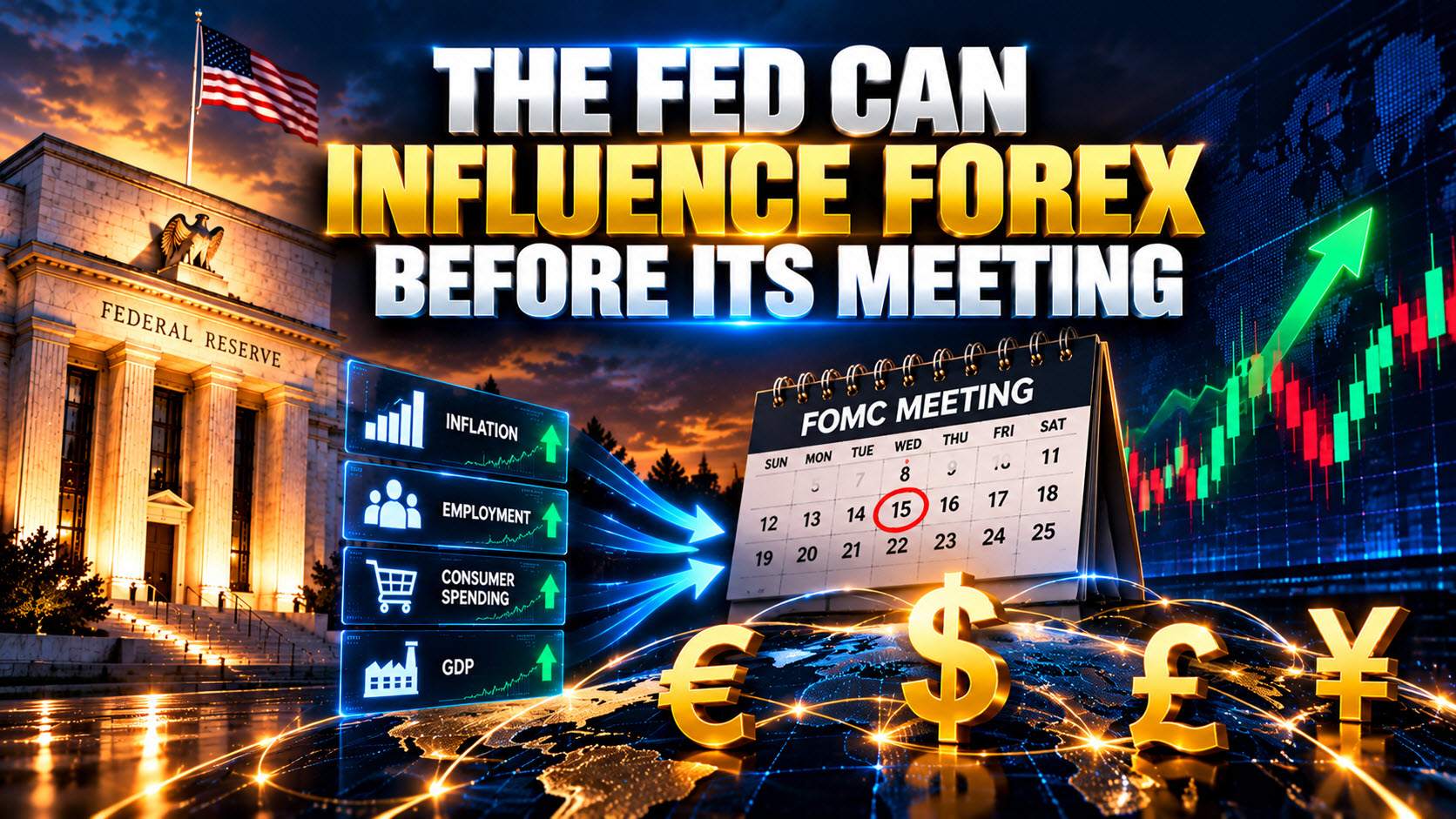
The market does not necessarily wait for an FOMC meeting.
If economic data begins changing expectations for Fed policy, currency markets can start reacting immediately.
For example:
Economic data changes → Fed expectations change → Treasury yields and financial conditions adjust → Currency markets respond
This process can happen before policymakers officially change anything.
That is why fundamental traders should monitor the economic information leading into an FOMC meeting rather than focusing exclusively on the meeting itself.
The Fed and the US Dollar: A Simple Framework
When analyzing the Fed from a Forex perspective, traders can ask five simple questions:
1. What is the Fed doing now?
Is monetary policy restrictive, neutral or becoming more accommodative?
2. What does the market expect next?
Are traders expecting rate hikes, unchanged policy or rate cuts?
3. What is the economic data saying?
Are inflation, employment and growth changing the outlook?
4. Is the Fed changing its communication?
Has the language become more hawkish or dovish?
5. How does the Fed compare with the other central bank?
This final question is especially important because Forex is a relative market.
Don’t Assume Every Fed Decision Will Move the Dollar
The Forex market does not react mechanically to every Fed announcement.
Sometimes the market reaction can be relatively small.
Sometimes the dollar can move sharply.
Sometimes the initial move can reverse.
The reason is that currency prices reflect many factors simultaneously.
Fed policy is extremely important, but it operates alongside:
- Economic growth expectations
- Inflation expectations
- Risk sentiment
- Capital flows
- Geopolitical developments
- Positioning
- Expectations for other central banks
This is why fundamental analysis should always consider the bigger picture.
Final Thoughts
The Federal Reserve matters to Forex traders because its monetary policy can influence one of the world’s most important currencies: the US dollar.
But understanding the Fed is not simply about knowing whether interest rates are rising or falling.
The more important questions are:
What does the Fed want to achieve?
What is the economic data telling policymakers?
What does the market expect the Fed to do next?
Has that expectation changed?
And most importantly:
How does the expected path of US monetary policy compare with the policy outlook of the other currency in the pair?
This is where fundamental Forex analysis becomes much more powerful.
The Fed’s decisions matter.
But expectations about the Fed can move the Forex market before the decision itself.
To Your Trading Success,
Vladimir Ribakov
Internationally Certified Financial Technician (CFTe)
Home Trader Club