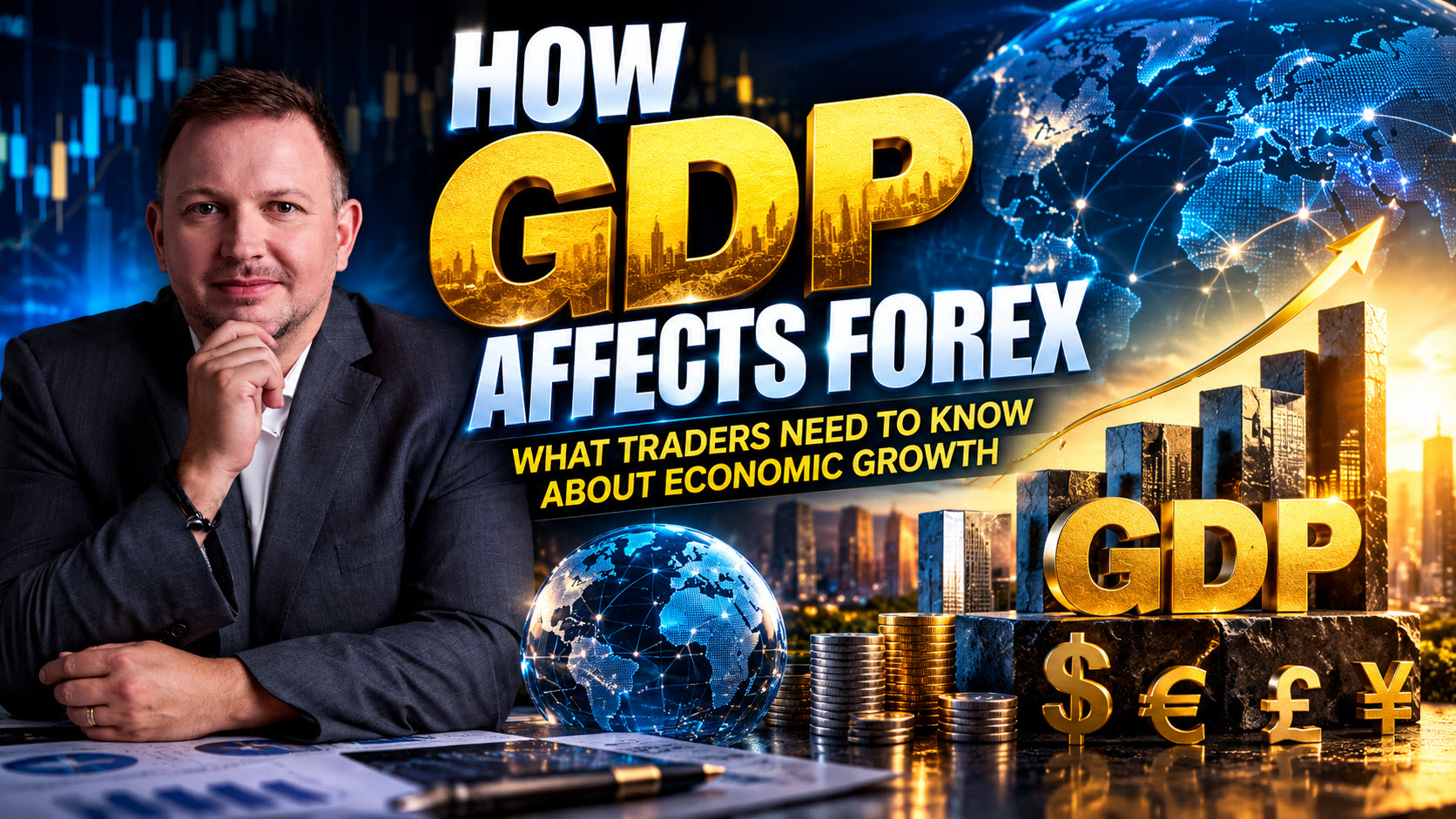



GDP growth is one of the most important indicators of economic health. But does stronger economic growth always lead to a stronger currency?
Not necessarily.
A country can report strong GDP growth while its currency weakens. Another country can experience slower growth while its currency appreciates. For Forex traders, understanding why these situations occur is an important part of fundamental analysis.
The key is to understand what GDP tells us about an economy, how it may influence monetary policy, and whether the latest figures change the market’s expectations.
Let’s break it down.
- 1 What Is GDP in Forex?
- 2 Trade with AvaTrade and Unlock Unlimited Home Trader Club Access
- 3 Why Does GDP Growth Matter to Forex Traders?
- 4 How Is GDP Growth Measured?
- 5 Strong GDP Growth Does Not Always Mean a Stronger Currency
- 6 What Happens When GDP Growth Is Weaker Than Expected?
- 7 How GDP Influences Interest-Rate Expectations
- 8 Why the GDP Forecast Matters More Than the Headline Alone
- 9 How GDP Affects Different Currency Pairs
- 10 GDP Is Important, but It Is Not the Whole Story
- 11 Common Mistakes Forex Traders Make When Analysing GDP
- 12 A Simple GDP Analysis Checklist for Forex Traders
- 13 Final Thoughts
What Is GDP in Forex?
GDP stands for Gross Domestic Product. It measures the total value of final goods and services produced within a country’s borders during a specific period.
In simple terms, GDP helps traders understand whether an economy is expanding or contracting.
When economic activity increases, businesses may produce more goods, consumers may spend more, and employment opportunities may improve. When activity slows, businesses and households may become more cautious.
GDP is therefore an important indicator of economic performance.
For Forex traders, however, GDP is not simply a measure of whether an economy is doing well. It can also provide clues about future interest rates, inflation pressures, business confidence, and the outlook for a country’s currency.
The important question is not just whether GDP is growing. It is what that growth means for the currency.
Trade with AvaTrade and Unlock Unlimited Home Trader Club Access
We have partnered with AvaTrade, one of the industry’s leading regulated brokers.
When you open and trade with AvaTrade through our partnership, you receive:
- Unlimited access to Home Trader Club
- Real-time trading education
- Daily and swing trading opportunities
- Our complete educational library
- Access to our Trade Copier Project
- Members-only trading community
If you’re looking to accelerate your trading journey while enjoying premium education, this partnership gives you everything you need under one roof.
If you already have account with them, still follow this link to open separate account with separate email. Once you did that, contact me with the telegram link below and we will give you the access.
Telegram Channel: https://t.me/vladimirribakovtradingchannel
Why Does GDP Growth Matter to Forex Traders?
Currencies are influenced by the relative economic outlook of different countries.
When an economy grows faster than expected, investors may reassess its prospects. Stronger growth can support business activity, improve confidence, and influence expectations for future monetary policy.
These developments may support the country’s currency under the right conditions.
On the other hand, disappointing GDP growth may raise concerns about economic weakness. Markets might begin anticipating lower interest rates or a more accommodative central bank, potentially putting pressure on the currency.
Consider the US dollar as an example.
If US economic growth comes in significantly stronger than expected, traders may reassess the outlook for US interest rates. If the data suggests that the Federal Reserve may keep monetary policy restrictive for longer, the dollar could receive support.
However, if the growth figure was already anticipated or the report suggests that inflation is easing without creating new policy concerns, the currency reaction could be different.
GDP matters because it contributes to the bigger economic picture—not because it provides an automatic buy or sell signal.
How Is GDP Growth Measured?
GDP is commonly reported as a percentage change over a particular period.
Traders should understand three important distinctions.
1. Quarter-on-quarter growth
Quarter-on-quarter GDP compares economic output with the previous quarter.
For example, if an economy produces more goods and services than it did in the preceding quarter, its GDP may increase.
Some countries also publish an annualised quarterly growth rate. This projects the quarterly pace over a full year and is not the same as the actual year-on-year growth rate.
2. Year-on-year growth
Year-on-year GDP compares economic output with the same period one year earlier.
This can help traders assess the broader growth trend and reduce the influence of some seasonal patterns.
3. Preliminary and revised GDP figures
GDP data may be released in stages. An initial estimate is published first, followed by updated estimates as more information becomes available.
This matters because a preliminary growth figure can later be revised.
A report may initially appear encouraging, but a downward revision to previous quarters could change the overall interpretation.
Forex traders should therefore examine the current reading, previous figures, revisions, and market expectations together.
Strong GDP Growth Does Not Always Mean a Stronger Currency
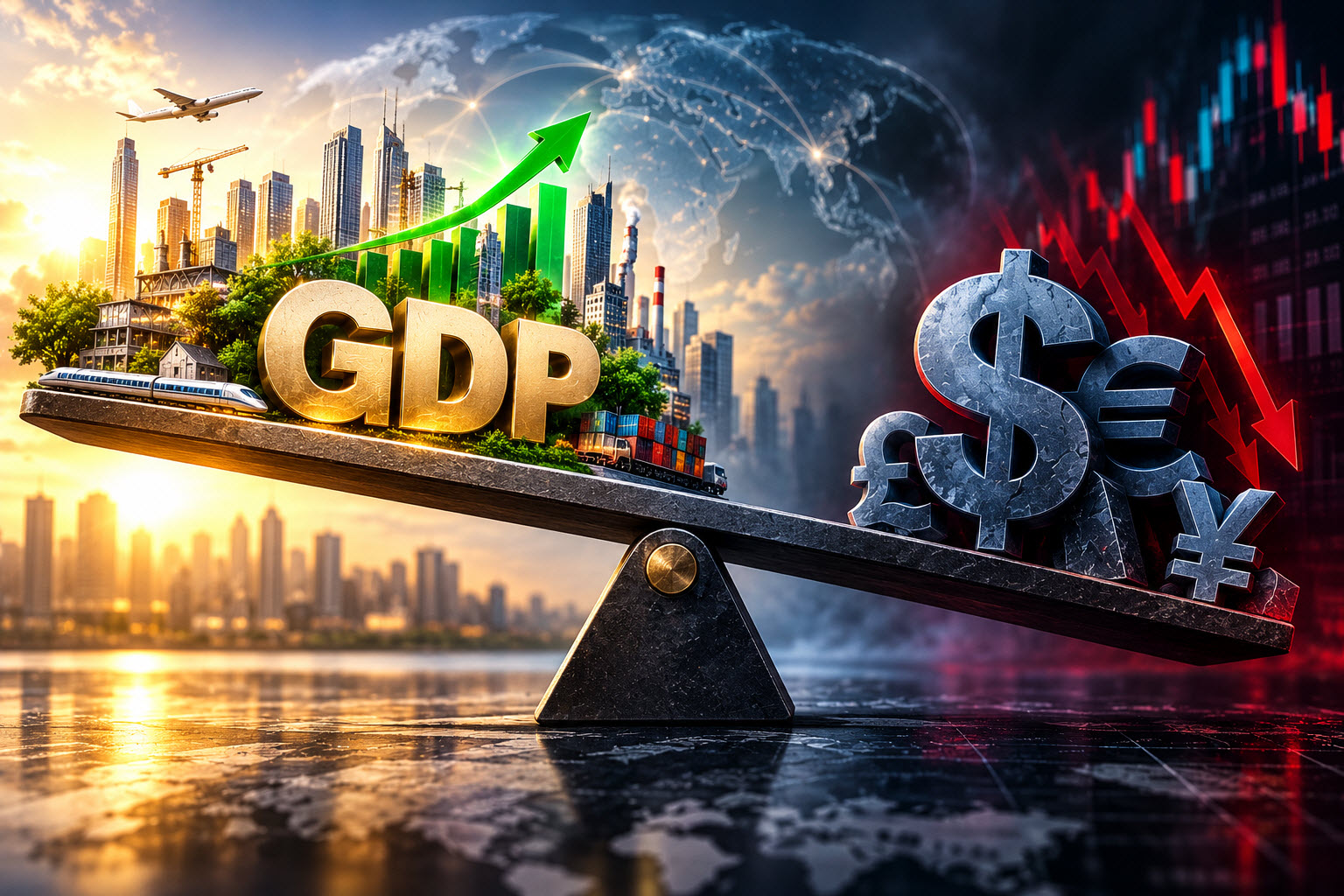
This is one of the most important lessons in fundamental Forex analysis.
It is tempting to assume that a growing economy must have a rising currency. However, exchange rates reflect expectations about the future, not simply the current state of the economy.
There are several reasons why strong GDP growth may fail to strengthen a currency.
Growth was already priced in
If traders were already expecting strong economic growth, the actual release may not provide much new information.
For example, suppose the market expects GDP growth of 2.5%, and the economy reports 2.6%.
Although growth is positive and slightly above expectations, the difference may be too small to change the market’s outlook significantly.
The currency may barely move or even decline if other factors dominate.
The central bank may still cut interest rates
Strong growth does not guarantee that interest rates will rise.
If inflation is falling, employment is weakening, or policymakers are concerned about future economic conditions, a central bank may still consider lowering interest rates.
If markets begin expecting lower rates despite positive GDP figures, the currency may struggle.
Growth may be weaker than the headline suggests
A headline growth number does not reveal every detail of the economy.
Traders may need to examine consumer spending, business investment, government expenditure, and net exports to understand what drove the result.
Growth driven by temporary factors may have different implications from growth supported by sustained consumer demand and business investment.
The lesson is simple: never interpret GDP in isolation.
What Happens When GDP Growth Is Weaker Than Expected?
Disappointing GDP growth can put a currency under pressure, but the reaction depends on the wider economic environment.
Imagine that the market expects an economy to grow by 1.8%, but the reported figure is only 1.0%.
This larger-than-expected slowdown may cause traders to reassess the country’s economic outlook.
They may begin considering whether the central bank will lower interest rates, whether businesses will reduce investment, or whether consumer demand is weakening.
If these developments lead to a less supportive outlook for the currency, selling pressure may emerge.
However, weaker GDP does not automatically mean a weaker currency.
If the result is better than the market feared, the currency could rise. Alternatively, if the other currency in the pair faces even greater economic difficulties, the exchange rate may move in the opposite direction.
Always compare the actual GDP result with expectations and consider what it changes about the future outlook.
How GDP Influences Interest-Rate Expectations
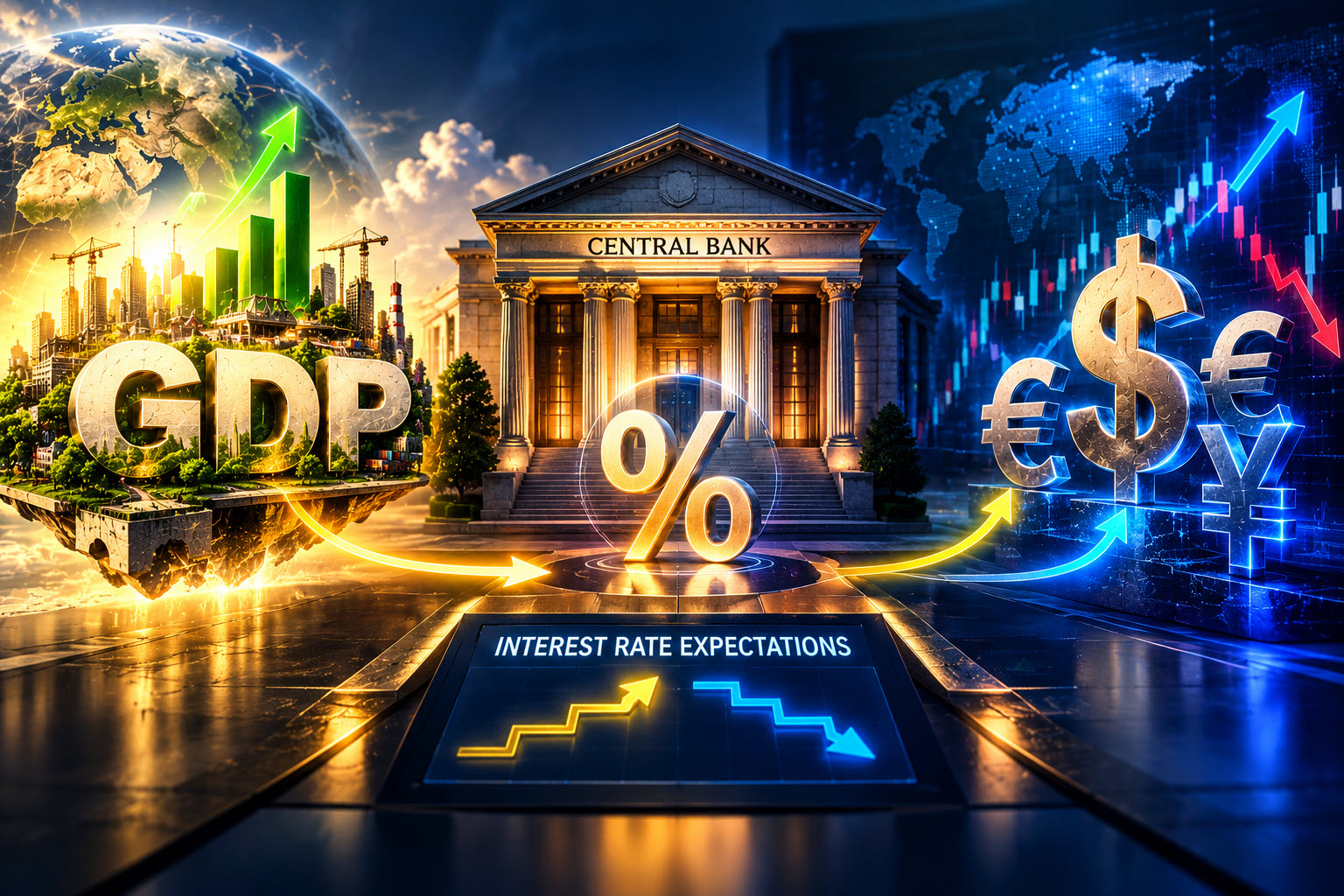
One of the most important connections between GDP and Forex is monetary policy.
Central banks assess economic growth alongside inflation, employment, financial conditions, and other indicators when deciding how to set interest rates.
Stronger growth can sometimes increase demand and contribute to inflationary pressure. If inflation remains persistent, a central bank may have less room to reduce interest rates.
That outlook can support a currency if markets begin anticipating relatively higher interest rates.
On the other hand, slowing growth may increase expectations of monetary easing, particularly if inflation is also moderating.
Lower expected interest rates can reduce the relative attractiveness of assets denominated in that currency.
However, the relationship is not automatic.
A strong economy can coexist with falling inflation, while weak growth can occur alongside stubbornly high prices. Central banks must consider these competing signals.
For traders, the key question is:
How does the GDP report change expectations for future monetary policy?
That question is often more useful than simply asking whether growth was strong or weak.
Why the GDP Forecast Matters More Than the Headline Alone
Before an economic report is released, market participants form expectations based on available information.
The actual figure is then compared with those expectations.
Consider three hypothetical scenarios:
Scenario 1: GDP is stronger than expected
The market forecasts growth of 1.5%, but the result is 2.2%. If this changes expectations toward tighter monetary policy, the currency may strengthen.
Scenario 2: GDP matches expectations
The forecast is 1.5%, and the actual result is also 1.5%. The release may produce a limited reaction if it contains little new information.
Scenario 3: GDP is weaker than expected
The forecast is 1.5%, but the result is 0.8%. If traders begin anticipating weaker economic conditions and lower future interest rates, the currency may weaken.
These are possible outcomes, not guaranteed reactions.
Even a positive surprise can trigger a currency decline if traders were expecting an even stronger result, if the data was already priced in, or if other developments outweigh the GDP report.
This is why understanding expectations is essential to interpreting economic data.
How GDP Affects Different Currency Pairs
GDP is most useful when considered in relation to the other currency in a pair.
EUR/USD
When analysing EUR/USD, traders should compare the economic outlook for the United States with that of the euro area.
Stronger US growth may support the dollar if it changes expectations for US monetary policy. However, stronger euro-area growth relative to expectations could support the euro.
The exchange rate depends on the relative outlook, not just the performance of one economy.
GBP/USD
For GBP/USD, traders can compare UK economic growth with US economic growth.
If UK GDP disappoints while US growth remains resilient, the relative outlook may become more supportive of the dollar.
However, the reaction also depends on inflation, central-bank expectations, and what markets had already anticipated.
USD/JPY
For USD/JPY, the relative economic and monetary-policy outlooks of the United States and Japan matter.
If US growth supports expectations for higher US interest rates relative to Japanese rates, the dollar may receive support against the yen.
But changes in Japanese monetary policy, risk sentiment, and other market forces can alter the relationship.
These examples highlight an essential principle: Forex is a relative market. Always analyse both currencies before forming a fundamental view.
GDP Is Important, but It Is Not the Whole Story
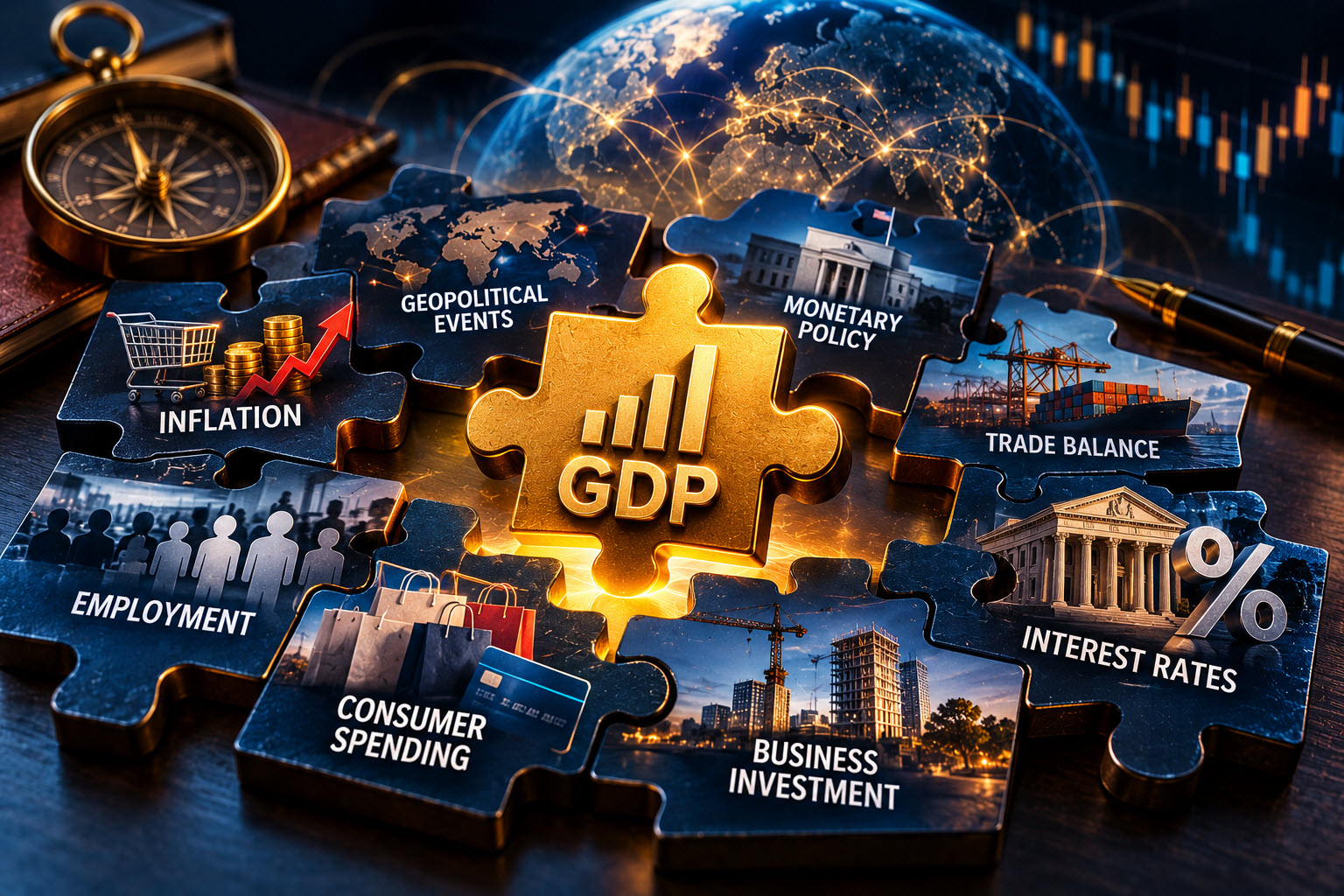
GDP provides valuable information, but it is only one part of fundamental analysis.
A complete assessment should consider other indicators that help explain the economy’s condition.
- Inflation: Is price growth accelerating or slowing?
- Employment: Are businesses hiring, and is unemployment changing?
- Consumer spending: Are households continuing to spend?
- Business investment: Are companies expanding or becoming more cautious?
- Interest-rate expectations: How might the data influence future central-bank decisions?
- Other economic indicators: Do recent reports confirm or contradict the GDP picture?
For example, GDP growth may remain positive while employment deteriorates and consumer spending slows. Such a combination could suggest that the economy is losing momentum.
Conversely, modest GDP growth alongside improving employment and easing inflation may create a different outlook for monetary policy.
Looking at several indicators together helps traders avoid drawing conclusions from a single report.
Common Mistakes Forex Traders Make When Analysing GDP
1. Assuming strong growth guarantees a stronger currency
A positive economic report does not guarantee buying pressure. Expectations, interest rates, and broader market conditions also matter.
2. Ignoring the market forecast
A strong headline can disappoint if traders expected an even better result.
3. Overlooking revisions
Revisions to earlier GDP figures can change the interpretation of the latest report.
4. Ignoring the composition of growth
The headline figure may hide weakness in important parts of the economy. The details can help traders assess whether growth is sustainable.
5. Focusing on only one currency
When trading a currency pair, traders must evaluate both economies and their respective monetary-policy outlooks.
6. Entering trades without considering volatility
Major economic releases can cause rapid price movements, wider spreads, and unexpected reversals. Risk management remains essential even when the fundamental outlook appears clear.
A Simple GDP Analysis Checklist for Forex Traders
Before and after a GDP release, ask yourself these questions:
- What is the market forecast?
- What was the actual GDP result?
- How does it compare with the previous reading?
- Were earlier figures revised?
- What components contributed to growth or weakness?
- Does the report change expectations for interest rates?
- How does the economic outlook compare with that of the other currency?
- How is the market reacting?
- Does the broader fundamental picture support the initial interpretation?
- Is there a clear trading setup with appropriate risk management?
This checklist will not predict every market reaction. Its purpose is to help you interpret GDP data more systematically rather than react emotionally to a headline.
Final Thoughts
GDP growth is an important indicator for Forex traders because it provides insight into economic activity and can influence expectations about future monetary policy.
However, strong growth does not automatically mean a stronger currency, and weak growth does not guarantee depreciation.
The market considers what was expected, what the latest figures reveal, how sustainable the growth appears, and what the information means for future interest rates.
It also compares the outlook for one economy with that of another.
When analyzing GDP, look beyond the headline. Compare the result with forecasts, review revisions, examine the details, and consider the implications for monetary policy.
Most importantly, never treat an economic indicator as a standalone trading signal.
Understand the data. Evaluate the expectations. Compare both currencies. Manage your risk.
That is how you can make GDP analysis a more useful part of your Forex trading process.
To Your Trading Success,
Vladimir Ribakov
Internationally Certified Financial Technician (CFTe)
Home Trader Club