


Stocks tumbled and the dollar rallied as military strikes intensified across the Middle East, sending oil to its biggest surge in four years and stoking concern that faster inflation could weigh on the global economy.
S&P 500 futures slid 1%, with benchmarks in Asia and Europe notching even bigger declines. Brent crude jumped around 8% above $79 a barrel as the war effectively shut the Strait of Hormuz — a vital artery off Iran’s coast that carries about a fifth of the world’s oil. In Europe, liquefied natural gas surged 52% after Qatar halted output at the world’s biggest export plant.
Safer assets were in demand as investors cut back on risk. Gold topped $5,400 an ounce. The dollar index climbed 0.7%. Meanwhile, Treasury and European bond yields jumped as oil-driven inflation fears prompted traders to scale back wagers on interest-rate cuts in the US, UK and euro area.
“The endgame remains highly uncertain, ranging from a relatively swift political exit to a broader regional spillover,” said Mathieu Racheter, head of equity strategy at Julius Baer. “In such a fog of war, markets tend to trade probabilities rather than shifting facts.”
The war in Iran is adding to headwinds for markets already on edge after fears over disruption from artificial intelligence and pressure in private credit nearly erased this year’s gains in the S&P 500. Investors are now focused on how long the conflict will last and how far hostilities might spread after President Donald Trump said the campaign could continue for weeks.
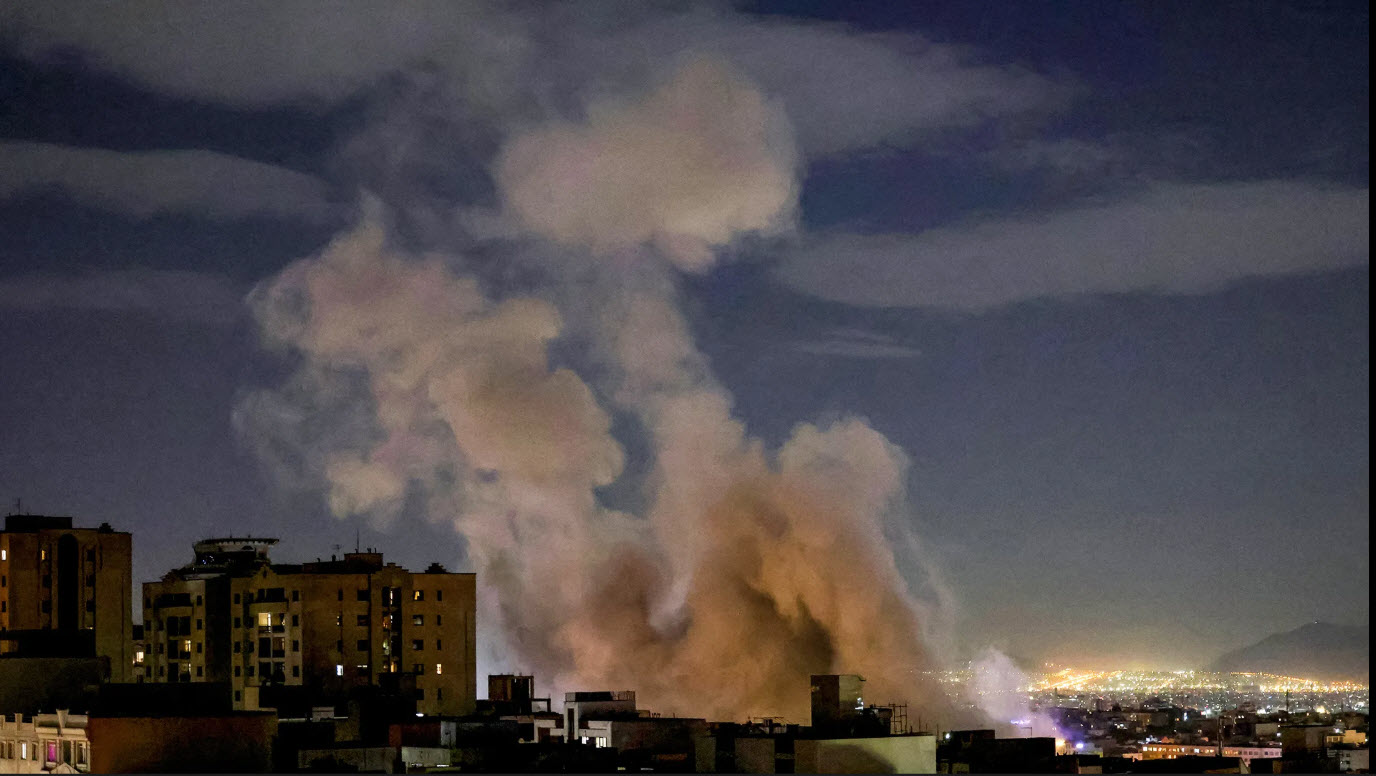
While Trump has called on Iran’s leaders to capitulate, the Islamic Republic’s security chief said it has no intention of negotiating with the US. Blasts were heard across Bahrain, the United Arab Emirates and Qatar on Monday as Gulf states intercepted missiles launched by Iran in response to the US-Israeli strikes.
Meanwhile, Aramco halted operations at Saudi Arabia’s largest refinery after a drone strike in the area, according to people familiar with the matter. QatarEnergy’s decision to cease LNG production followed attacks on its Ras Laffan complex.
“It is still very unclear what the duration of the conflict will be and more importantly, how the energy market reacts,” said Andrea Gabellone, head of global equities at KBC Securities. “One positive for the US is that the market has corrected since January, so we are not in overbought territory. It’s fair to say havens should continue to outperform.”
Energy and defense stocks rallied, with Exxon Mobil Corp. shares climbing 5.2% in early trading. British Airways owner IAG SA fell 5.4% amid a widespread disruption to flights in the Middle East.
Investors sold Treasuries after US government debt notched big gains last month. Short-term gauges measuring inflation two years ahead have jumped around 10 basis points in the US, UK and Europe, reflecting the spillover from higher energy prices.
For Geoff Yu, senior macro strategist at BNY, Monday’s rise in US yields came as no big surprise given the elevated levels at which bonds were trading. The 10-year rate was at 4%, seven basis points higher for the day.
Points of Focus
“Markets were well-positioned for risk aversion, even if the original drivers were not geopolitics,” Yu said. “We stress that the situation remains volatile. A ‘day-by-day’ approach will probably take precedence for now.”
Prashant Bhayani, chief investment officer for Asia at BNP Paribas Wealth Management, said the main questions traders are looking out for are how long the disruption lasts, developments in the Strait of Hormuz, any impact on oil infrastructure and whether Iran and the US can reach a negotiated settlement.
“Most geopolitical events have limited long-term impact on asset markets,” Bhayani said. “There is already a premium in oil of circa $7-$10 before today’s trading. Only in an extended conflict, with oil prices over $100, would it materially impact the global economy.”
Corporate Highlights:
- Nvidia Corp. agreed to invest $4 billion in two companies that develop data center optics that are essential for artificial intelligence systems.
- Blackstone Inc.’s $55 billion real estate fund for wealthy individuals last month took in more money from investors than it paid out for the first time since 2022, a sign of rebounding sentiment in the commercial-property sector.
- Money managers who piled into a $240 million commercial-mortgage bond tied to a San Francisco office building were hit with significant losses in recent weeks after the underlying loan was sold at a steep discount.
- BlackRock Inc.’s Global Infrastructure Partners LP and EQT AB agreed to buy AES Corp. for about $10.7 billion in cash as the market heats up for power plant developers that can provide electricity for energy-hungry AI data centers.
Some of the main moves in markets:
Stocks
- S&P 500 futures fell 1% as of 8:28 a.m. New York time
- Nasdaq 100 futures fell 1.2%
- Futures on the Dow Jones Industrial Average fell 1%
- The Stoxx Europe 600 fell 1.8%
- The MSCI World Index fell 0.6%
Currencies
- The Bloomberg Dollar Spot Index rose 0.7%
- The euro fell 0.8% to $1.1716
- The British pound fell 0.6% to $1.3400
- The Japanese yen fell 0.9% to 157.41 per dollar
Cryptocurrencies
- Bitcoin rose 0.3% to $65,843.2
- Ether rose 0.2% to $1,933.6
Bonds
- The yield on 10-year Treasuries advanced seven basis points to 4.01%
- Germany’s 10-year yield advanced seven basis points to 2.71%
- Britain’s 10-year yield advanced 13 basis points to 4.36%
Commodities
- West Texas Intermediate crude rose 7.7% to $72.20 a barrel
- Spot gold rose 2.3% to $5,401.26 an ounce